

Critique sheet
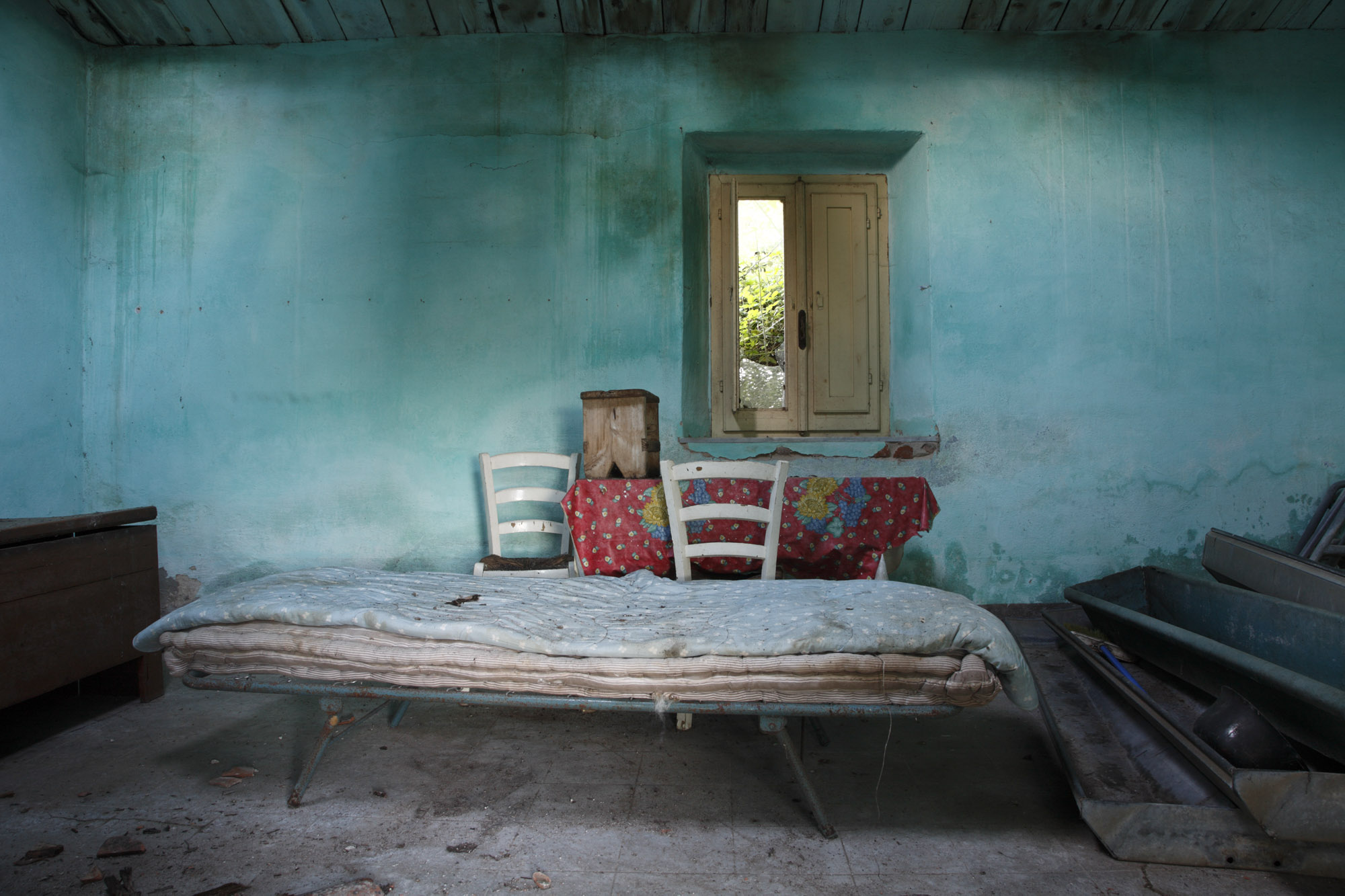
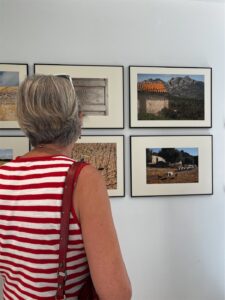
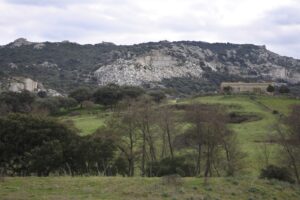
It is a rare gaze, that of Nanni Angeli, perhaps unique. For La ‘janna a lianti, after a long stay in Bologna, Angeli returns to the paths of his memory as a child and boy born and raised in Gallura, those real and metaphorical paths that lashed the trajectories of the unsuspecting future photographer’s gaze, taming him to recognise the beauty – sometimes obvious, more often hidden among the debris – of the Gallura stazzi. It is the gaze of a witness who takes on the responsibility of documenting what remains, what flees or ruins, but also what arrives and grafts itself, sometimes wildly, onto the survivals of a civilisation that over the centuries has taken root silently and discreetly in this corner of the Mediterranean. The images in La ‘janna a lianti give the observer the privilege of an internal, profound, objective and at the same time loving viewpoint on the stazzi of Gallura.
Read the rest of the card
An internal point of view, as an autochthonous person, therefore, on the one hand facilitated by familiarity with these places, the people who live and work there, a clear idea of the strong and indispensable elements of the landscape, and also the not taken for granted ability to know how to cover a territory as vast as it is fragmented. But on the other hand, the very fact of dealing with one’s own land and people is a pitfall that could mislead the artist, leading him to take on the need for redemption and revenge of a decaying culture, perhaps by aestheticising architecture, objects, faces and landscapes, or even by slipping on the picturesqueness and superficiality of a postcard Sardinia. Nanni Angeli does not fall for this and manages to make the most of his indigenous gaze to capture the real landscape in all its complexity.
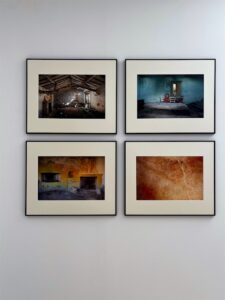
So his is also an objective, disenchanted point of view. There is not only the life, but also the death of the stazzo. But they are like two moments of the same breath: they cannot be separated, on pain of apnoea. In fact, there are no idyllic photos alternating with photos of decay: in each snapshot, the Gallurese countryside blooms and withers: water heals the wounds of the granite quarries; terracotta stands next to plastic; in a room ravaged by time, the warmth of traces of life persists; in a man’s solitude, the red of flowers; scrap iron consoled by the green of the lawn; the smile and shadow in the faces of the elderly; a precious decoration on a chipped plaster…
Here, in Nanni Angeli’s images there is no black and ghostly death looming over the colours of life, but rather a sense of ineluctable and peaceful transience that blows over the rust and flows through the cracks and wrinkles. In this sense the gaze is profound: the symbolism is not banal, the emotions are contrasting, layered and co-present. There is no minimalism: elements and trajectories abound that unite them, hold them together, make them resist with and against the inexorably changing world. Light plays an important role in this: it rips through, floods, gives depth, enlivens, does not drive out ghosts but at least renders them harmless.
So much so that even the great spectre seems to be slowing its inexorable march.
And this is perhaps the most decisive manifestation of Nanni Angeli’s loving point of view. With his skilful use of light, his objective and profound gaze, his attention to the density of the real landscape, his choice of people and contexts to portray, the artist bears witness to and redeems the culture of the stazzi, accepting it for what it is in the early 2000s, showing it to us in its intimate and intrinsic dignity. By loving it, and by ensuring that this love pervades every image, even the most apparently melancholic, and arouses in those who have the privilege of observing it the desire to be there, to be nourished by a culture that in some way continues to live and for this reason continues to need men and women to care for it.
Biography
Nanni Angeli was born in 1969. In the early 1990s, he started several photographic projects on Sardinia. From 1992 to 2011 he lived in Bologna and, as a stage, music and theatre photographer, he documented the Bologna scene, conducting research on the photographic representation of performance events. He has published in numerous books, magazines and newspapers, in Italy and abroad. He is active in the field of didactics and the dissemination of photographic culture.
Since 1996, with Paolo Angeli, he has directed the International Festival Isole che Parlano. Since 2011 he lives and works in Sardinia.
Interview
Photographs

Download
Press release
Download exhibition press release (PDF, 142Kb)