

Press release dated 7 October 2026
New Ways of Living – Current Changes and Future Prospects for Alta Gallura
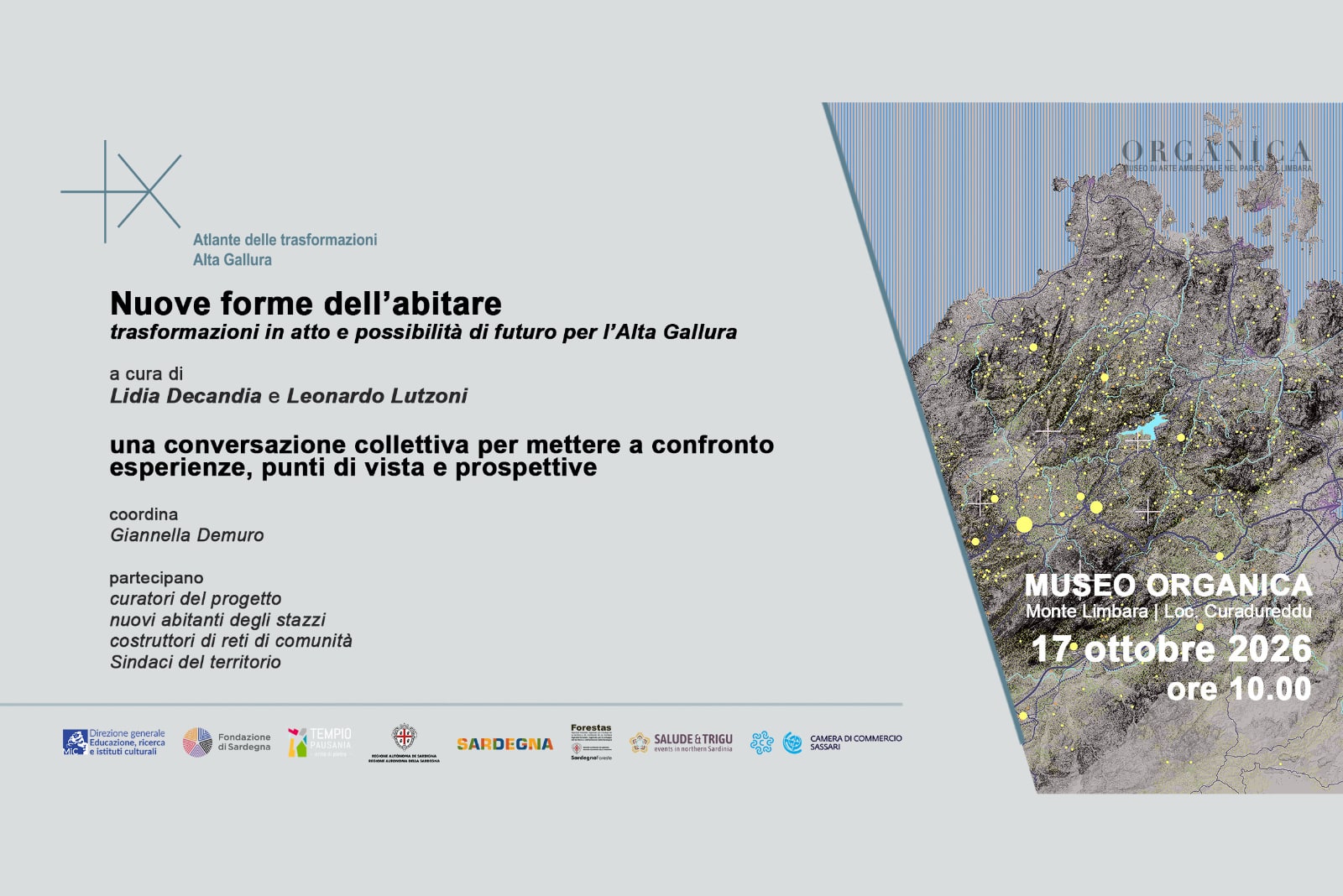
Saturday 17 October, from 10.00 am, a public event at the Organica Museum
to compare experiences, viewpoints and perspectives
On Saturday 17 October, from 10.00 am, the Organica Museum will host “New Forms of Living – Ongoing Transformations and Future Possibilities for Alta Gallura”, a public event forming part ofthe Atlas of Transformations in Alta Gallura, a wide-ranging research project curated by urban planners Lidia Decandia and Leonardo Lutzoni for the University of Sassari. The event will take place alongside the exhibition“Atlas. Video Portraits of Gallura’, an integral part of the research dedicated to the transformations of the Gallura region and currently on display at the Organica Museum.
The meeting will bring together the project leaders, some of the people interviewed during the research, the new residents of the stazzi, the young people building community networks (co-working, co-living, co-housing), local mayors and the general public, with the aim of sharing experiences, viewpoints and perspectives on the present and future of Alta Gallura.
“New Ways of Living” is an important opportunity to reflect on a journey that has taken us across the region, gathering stories, experiences, ideas and testimonies, whilst seeking to understand the changes already underway and the new possibilities that may open up for those who live in these places. The Atlas is, in fact, intended as a journey through communities, the environment, culture and innovation, capable of highlighting the potential already present and imagining new possibilities for the future.
The morning’s programme will focus on some of the issues that have emerged during the project: the ways in which the relationship with local areas is changing, new forms of living, the opportunities and challenges facing inland areas, the role of communities, and the possibility of developing new perspectives based on the resources, people and experiences already present in Alta Gallura. Whilst in previous years this phenomenon was largely individual in nature and characterised by the arrival in Gallura of people from other countries, in recent years innovative initiatives with a more community-based character have been taking root.
The public will also play an active part in this process. Throughout the exhibition“Atlante. Video Portraits of Gallura”, a dedicated space will allow visitors to share their impressions, reflections, ideas and suggestions, helping to enrich the narrative of the region. The contributions gathered will be brought together at the meeting on 17 October, forming part of the discussion.
“New Forms of Living” is therefore intended not only as an opportunity to explore the exhibition in greater depth, but above all as a chance to take stock of the changes currently taking place in Alta Gallura and to reflect, together, on the possibilities for the future.
The mayors of several municipalities in Alta Gallura will take part in this ‘collective conversation’, with the aim that these experimental initiatives on the fringes may yield important tools for rethinking and revitalising policies and ways of thinking, living, planning and governing the territory. It is only by building a broad network of relationships that it is possible to develop a new vision for the region.
The event on 17 October forms part of the Organica Museum’s autumn exhibition programme, which, until 21 October, presents two exhibitions dedicated – through different artistic languages and perspectives – to the relationship between history, the local area and the landscape: “Atlante. Video Portraits of Gallura’, by documentary filmmakers Gaetano Crivaro and Margherita Pisano, and ‘Traces of Earth and Wind’, a solo exhibition by the artist Caterina Lai.
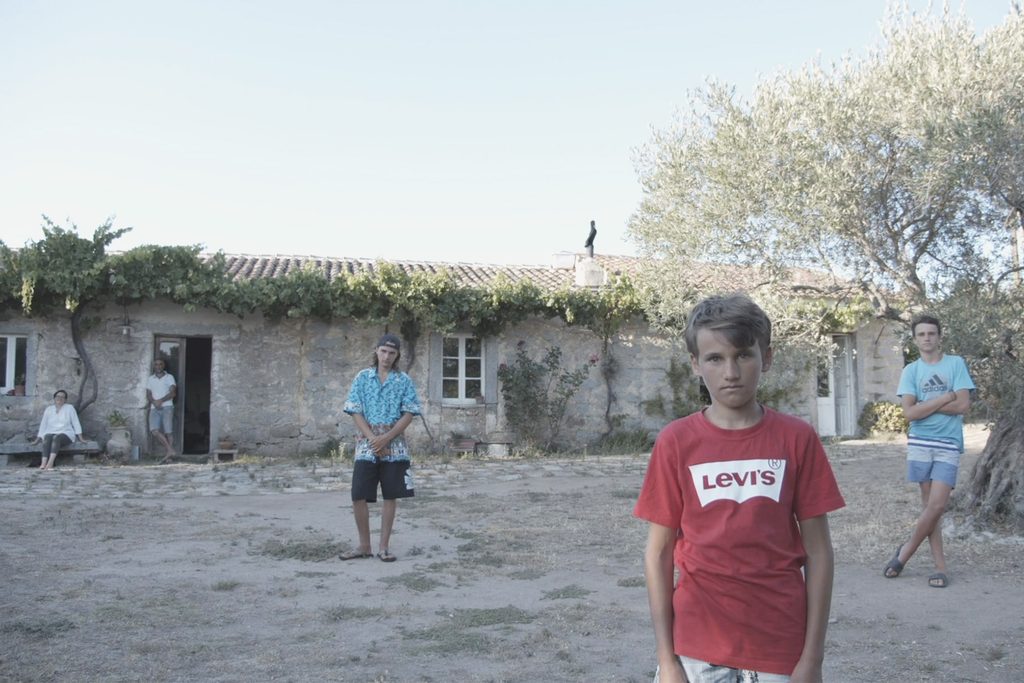
“Atlante. Video Portraits of Gallura”brings together interviews conducted by L’Ambulante, a research collective founded by documentary filmmakers Gaetano Crivaro and Margherita Pisano, and curated by Lidia Decandia. Eight short films depict a Gallura undergoing transformation through the stories of new residents, entrepreneurs, shepherds and livestock farmers: experiences, voices, images and sounds that reveal a region far from static, where new ways of living and working intertwine with the ancient stazzi, the land and the region’s natural resources. Thus takes shape the narrative of a Gallura in flux, where the contemporary world seems, in some respects, to rediscover the archaic. The brief portraits presented in the exhibition form partof the Atlas of Transformations in Upper Gallura as small visual and auditory fragments: accounts of ways of life scattered across a vast and complex territory, capable of exploring the possibilities for its future, but also the challenges and risks associated with the ongoing processes of touristification.
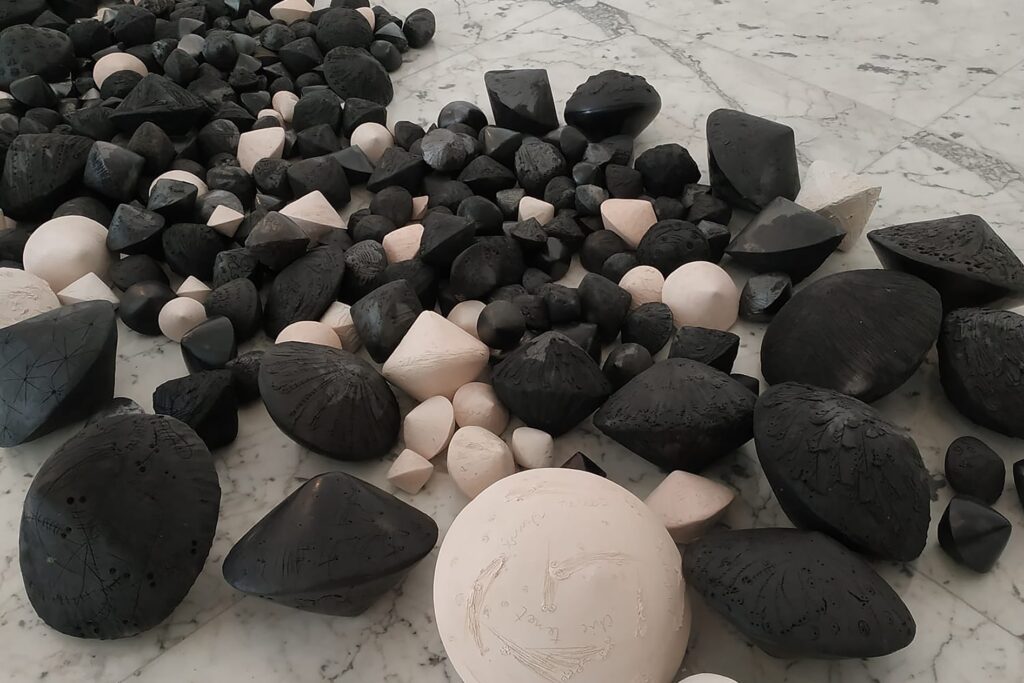
For the section dedicated to contemporary art, Caterina Lai presents“Traces of Earth and Wind”, a solo exhibition curated by Maria Dolores Picciau. In the heart of Limbara Park, the works by this artist from Dorgali weave together memory, material and landscape. The centrepieces of the installation are the ‘Licuccos’, biconical forms whose shape echoes the reassuring image of traditional silver buttons and the time-honoured sweetness of bread and festive cakes: spread out on the ground like an evocative mineral beach and suspended amongst the branches, poised between the weight of the earth and the lightness of the sky. Amidst the bark of the trees and the breath of the woodland, Lai’s clay creations cease to be mere objects and become living organisms: an invitation to rediscover, through art, the bond between humankind, memory and the soul of the landscape.
* * *
Organica – Museum of Environmental Art in Limbara Park is a project by the cultural association Tramedarte, under the artistic direction of Giannella Demuro, and carried out in collaboration with the Municipality of Tempio Pausania, the MIC – Directorate-General for Education, Research and Cultural Institutes, the Fondazione di Sardegna, the Region of Sardinia, the Sassari Chamber of Commerce – Salude & Trigu framework programme, Fo.Re.S.T.A.S., the Italian Touring Club, the University of Sassari, the University of Pavia, the “Mario Sironi” Academy of Fine Arts in Sassari, cultural associations and partners Cantina Gallura, Gallura Mia srl, Giua clothing, Hotel Pausania Inn and La Baita Limbara.
* * *
INFO
Location: Tempio Pausania | Monte Limbara, Curadureddu (SS 392 Tempio–Oschiri)
Opening hours:
Tuesday – Thursday 12 > 17
Friday – Sunday 12 > 18
Closed: Mondays
free admission
Mobile: 339 590 6900 | info@organicamuseo.it
www.organicamuseo.it |
FB www.facebook.com/organicamuseo
IG www.instagram.com/organicamuseo
YT www.youtube.com/channel/UCiEx7M8G5Gqr14tf0-t73Jg